A Question Every Beginner Eventually Asks
Sooner or later, every newcomer to Historical European Martial Arts asks the same question:
Which weapon should I start with?
The internet is full of opinions. Some people insist that longsword is the obvious choice. Others recommend rapier for its precision, sabre for its speed, or sword and buckler for its rich historical tradition.
The truth is that there is no universal answer.
Choosing your first HEMA weapon is not about finding the “best” weapon. It’s about finding the one that makes the most sense in your particular situation.
Start With Your Club, Not Your Favourite Sword
Many beginners discover HEMA through YouTube videos, historical films, or social media. It’s natural to become fascinated by a particular weapon before ever stepping into a training hall.
However, your first weapon should rarely be chosen based on what looks most exciting online.
The most important factor is the club where you train.
Every HEMA club develops its own areas of expertise. Some focus primarily on longsword, while others specialise in rapier, sabre, or sword and buckler. Training with experienced instructors and a group practising the same discipline will always provide a better learning experience than trying to follow your favourite weapon in isolation.
HEMA is learned with people, not with algorithms.
Every Weapon Offers a Different Experience
One of the greatest strengths of HEMA is its diversity. Each weapon represents a different historical tradition, tactical approach, and way of thinking about fencing.
Longsword is the most widely practised discipline and often the easiest entry point into the international HEMA community. Its popularity means there are more clubs, tournaments, seminars, and educational resources available than for most other weapons.
Rapier rewards patience, precision, and careful distance management. Rather than relying on powerful cuts, it emphasises timing, point control, and tactical decision-making.
Historical sabre combines dynamic footwork with fluid cutting mechanics. Depending on the tradition being studied, it may also reflect strong military influences and a different rhythm of fencing.
Sword and buckler represents one of the oldest surviving European fencing traditions. It introduces a unique relationship between weapon and shield, encouraging active defence and close-range decision-making.
None of these disciplines is inherently better than the others. They simply ask different questions of the practitioner.
Your Goals Matter More Than Trends
Before choosing a weapon, ask yourself a different question:
Why do you want to practise HEMA?
Some people are fascinated by historical research and source interpretation. Others enjoy competition, while many are simply looking for an engaging physical activity and a welcoming community.
Your goals will naturally influence which weapon feels most rewarding over time.
Fortunately, your first choice does not have to be your last. Many experienced practitioners eventually train multiple disciplines, discovering that skills developed in one weapon often improve their understanding of another.
Don’t Rush to Buy Your First Sword
Choosing a weapon and buying one are two different things.
One of the most common beginner mistakes is purchasing a steel simulator before gaining enough experience to understand what actually suits their training.
Most clubs provide loaner weapons, allowing newcomers to try different disciplines before making a financial commitment. This not only helps avoid expensive mistakes but also gives practitioners the opportunity to experience differences in balance, handling, and training methodology firsthand.
The best first sword is often the one you don’t buy immediately.
There Is No Wrong Starting Point
Perhaps the most reassuring thing for beginners is this:
There is no perfect first weapon.
Whether your journey begins with a longsword, a rapier, a sabre, or a sword and buckler matters far less than training consistently with good instructors and an active club.
Your understanding of HEMA will continue to evolve, and your interests may evolve with it.
The weapon is only the beginning.
The real journey is learning how history becomes modern practice.
Learn More
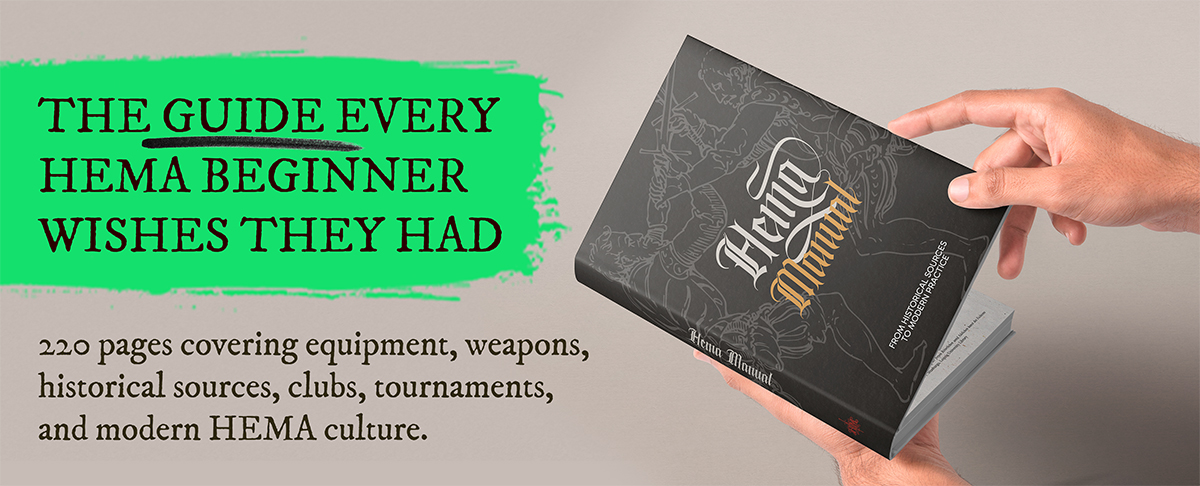
HEMA MANUAL explores the history, characteristics, historical traditions, modern training applications, and equipment requirements of longsword, rapier, sabre, and sword & buckler. It also explains how weapon simulators, clubs, and training goals influence the choices practitioners make throughout their HEMA journey.